The Sweet Spot: Valuation Strategies for 5-to-50 Unit Apartment Buildings
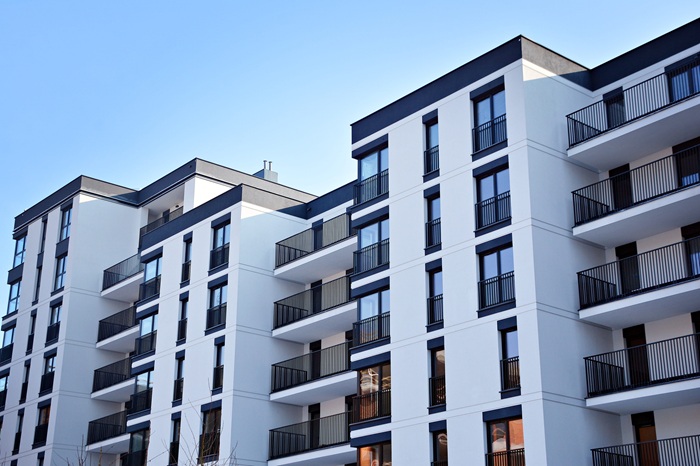
In the commercial real estate world, mid-sized multi-family properties (specifically those ranging from 5 to 50 units) occupy a uniquely advantageous space. Often referred to by commercial investors as "the sweet spot," these properties are large enough to generate substantial, institutional-grade cash flow, yet small enough to bypass the aggressive bidding wars dominated by massive private equity REITs.
Whether you are managing a classic 12-unit brownstone in Whittier or a recently renovated 36-unit complex in Lowertown St. Paul, mid-sized apartments offer incredible flexibility, stable occupancy, and strong equity upside. However, valuation for 5-to-50-unit buildings presents a specialized challenge.
Unlike 1-to-4 family residential properties that rely almost entirely on sales comparison grid adjustments, mid-sized apartment buildings transition firmly into pure commercial territory. Their market value is fundamentally tied to operational financial performance, or, specifically, how effectively the property generates and maintains Net Operating Income (NOI).
To ensure your mid-sized asset is accurately appraised for refinancing, acquisition, or estate planning, you must understand the specific valuation strategies and financial metrics commercial appraisers use to evaluate this asset class. Here is an in-depth guide to navigating the appraisal process for 5-to-50 unit properties in the Minneapolis/St. Paul metro area.
The Valuation Foundation: The Income Capitalization Approach
While commercial appraisers analyze market sales comparisons, the primary driver for a 5-to-50 unit building is almost always the Income Capitalization Approach. At its core, this approach converts a property's expected future income stream into a present capital value using a straightforward formula:
MarketValue=NetOperatingIncome(NOI)CapitalizationRate(CapRate)
Because your building's valuation is directly calculated using this ratio, even minor adjustments to your reported income or expenses create massive swings in the final appraised value. For instance, in a 6.5% cap rate market, every single dollar added to your bottom-line NOI increases your building’s overall property value by roughly $15.38.
1. Optimizing Net Operating Income (NOI) Beyond Base Rent
When an appraiser evaluates your property's income stream, they look at Gross Potential Income (GPI) minus vacancy losses and operating expenses. Property owners often focus exclusively on raising base monthly rent, but optimizing NOI requires a multi-dimensional approach to income generation:
-
Capturing Ancillary Income Streams: Modern commercial appraisals look closely at secondary revenue drivers. Are you monetizing reserved off-street parking spots or garage stalls? Do you offer on-site coin or app-operated laundry facilities? Adding storage locker rentals, pet rent fees, or utility rub-back systems (RUBS) directly expands your gross operating income without requiring massive capital expenditures.
-
Proving Below-Market Upside: If your units currently rent below hyper-local submarket averages, a specialized commercial appraiser will evaluate your "loss-to-lease." Presenting clear, executed lease comps from neighboring properties demonstrates that your building possesses immediate upside, supporting a stronger market position in the appraisal report.
2. The Twin Cities Cap Rate Dynamic: Location, Class, and Condition
The Capitalization Rate (Cap Rate) reflects the expected rate of return on a real estate investment based on the risk profile of the asset. In the Minneapolis/St. Paul metro area, cap rates vary significantly depending on micro-location, building class, and structural condition.
-
Submarket Nuances: A 24-unit building in a prime, high-demand neighborhood like Uptown Minneapolis, North Loop, or Grand Avenue in St. Paul will typically command a compressed (lower) cap rate due to lower perceived investment risk and strong tenant demand.
Lower cap rates translate directly to higher property valuations. Conversely, mid-sized assets in secondary or tertiary suburban submarkets may trade at higher cap rates to account for localized vacancy risk.
-
Deferred Maintenance Penalties: Appraisers do not view cap rates in a vacuum. If a 30-unit building requires an immediate roof replacement, updated boiler systems, or tuckpointing, the appraiser will adjust the applied cap rate upward or deduct the capital expenditure (CapEx) costs directly from the final value. Keeping capital systems updated protects your baseline cap rate classification.
3. The Importance of Precise, Accurate Expense Reporting
Nothing derails a commercial multi-family appraisal faster than messy, inaccurate, or incomplete financial records. When calculating NOI, commercial appraisers perform a rigorous audit of your Effective Gross Income (EGI) against your actual operating expenses over a 12-to-36-month period.
-
Avoiding Expense Omissions: Owners operating 5-to-50 unit properties sometimes omit key operational line items, such as off-site management fees, snow removal contracts, turnover cleaning, or reserves for replacement, assuming it makes the building look more profitable.
However, commercial appraisers are bound by professional standards to apply realistic, market-derived expense ratios (often between 35% and 50% of EGI for mid-sized Twin Cities assets). Providing clean, fully itemized profit-and-loss (P&L) statements builds immediate credibility and prevents the appraiser from substituting higher, conservative market-default expense estimates.
-
Documenting Utility and Tax Trends: Property taxes and municipal utilities represent two of the largest expense line items for multi-family assets in Minnesota. Providing proof of contested tax assessments or energy-efficient HVAC upgrades allows the appraiser to justify lower operating expense ratios, directly boosting your calculated NOI.
Key Financial Metrics for Mid-Sized Multi-Family Valuations
-
Net Operating Income (NOI): Total real estate revenue generated minus all necessary operating expenses (excluding debt service and income taxes).
-
Capitalization Rate: The ratio of NOI to property asset value, reflecting submarket risk and investor yield expectations.
-
Operating Expense Ratio (OER): Total operating expenses divided by Effective Gross Income; helps measure operational efficiency against regional benchmarks.
-
Gross Rent Multiplier (GRM): A secondary comparative metric calculated by dividing the purchase price/value by the total annual gross potential rent.
Frequently Asked Questions About Mid-Sized Apartment Appraisals
How Do Commercial Appraisers Account For Vacant Units During An Appraisal?
Appraisers do not simply subtract actual lost rent on the day of the inspection. Instead, they analyze historical property performance alongside broader submarket vacancy averages in the Twin Cities. They apply a stabilized market vacancy and collection loss percentage (typically between 3% and 7%) to calculate Effective Gross Income.
Does A 5-Unit Building Get Appraised Like A Single-Family House Or A Commercial Property?
In the mortgage and appraisal world, 5 units is the exact threshold where a property shifts from residential to commercial real estate. A 4-unit property utilizes residential Fannie Mae/Freddie Mac appraisal guidelines, whereas a 5-unit building requires a full commercial appraisal utilizing the Income Capitalization Approach and commercial market sales comparisons.
How Do Capital Improvements (Like New Kitchens Or Windows) Impact A Mid-Sized Valuation?
Capital improvements impact value in two distinct ways: first, they allow you to command higher market rents, which directly increases your top-line NOI. Second, modernizing major building systems lowers the property's risk profile, justifying a more favorable (compressed) cap rate in the appraiser's final analysis.
Why Shouldn't I Just Use A General Residential Appraiser For My 10-Unit Building?
Commercial multi-family assets require deep familiarity with commercial lease structures, submarket cap rate trends, utility allocation systems, and institutional lending standards. A specialized commercial appraiser possesses the specific market intelligence needed to accurately value complex income-producing property infrastructure.
Partner with Twin Cities Commercial Appraisal Experts
Maximizing the appraised value of a 5-to-50 unit multi-family property requires far more than basic square-footage calculations. It demands a sophisticated understanding of localized Twin Cities cap rate trends, submarket rental dynamics, and precise NOI capitalization strategies.
At Lenders Appraisal Services, we bring over 25 years of specialized commercial real estate appraisal experience to property owners, lenders, and investors across the Minneapolis/St. Paul metro area. Our certified commercial appraisal team meticulously analyzes your property’s operational financial data, capital improvements, and income potential to deliver fully compliant, authoritative valuation reports that hold up under the highest levels of institutional scrutiny.
Unlock the true commercial value of your multi-family asset. Contact Lenders Appraisal Services today to request a commercial appraisal quote or schedule a consultation for your 5-to-50 unit apartment building in the Twin Cities.